
Arts
Shaquille O’Neal gives FAU students DJ performance and financial wisdom lecture
By Katherine Langford
Advertisement · Why this ad?
Marcus manages the day-to-day editorial workflow across all brands, coordinating coverage assignments and ensuring editorial standards are met. He previously served as city editor at the Pioneer Press and holds a degree in Political Science from Carleton College.
More from Marcus →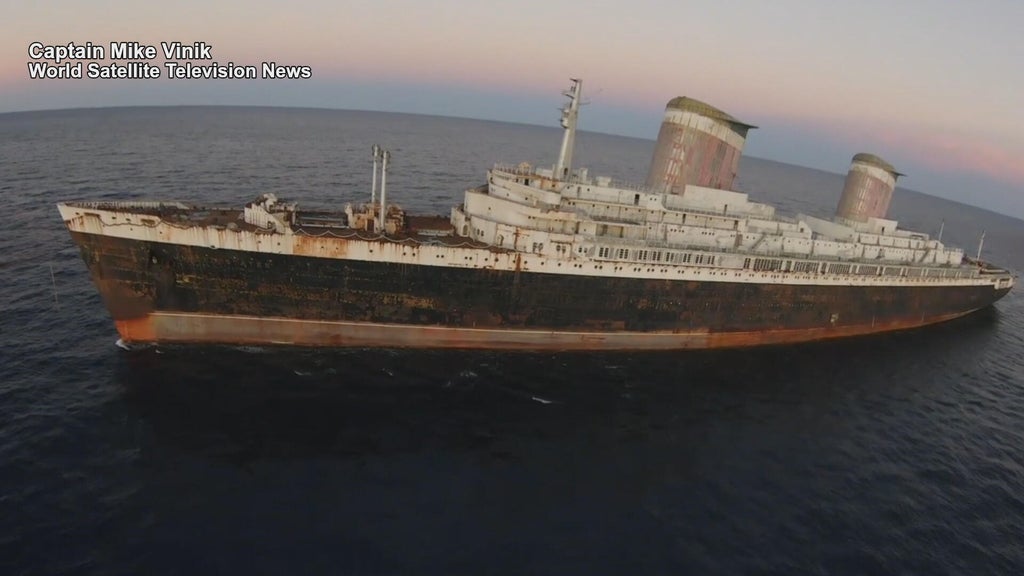
The historic SS United States, a stately ocean liner that once held the unbeaten record for the fastest transatlantic crossing, is set to be sunk off Florida's coast on November 11, 2026, to become the world's largest artificial reef. This monumental event, which will be livestreamed starting at 1 p.m. ET, marks the end of an era for this iconic vessel. CBS News Philadelphia will provide live coverage, ensuring that residents and enthusiasts alike can witness this historic moment from the comfort of their homes. The sinking represents a complex ending for a ship that embodied American ambition, and a new beginning for Florida’s Gulf Coast as a premier diving destination.
The SS United States wasn't just a ship; it was a symbol of American ingenuity and post-war optimism. Launched in 1952 from the Newport News Shipbuilding & Drydock Company in Virginia, the ship quickly earned a reputation for its speed and elegance. Its maiden voyage was a spectacle, carrying 1,700 passengers including an Associated Press reporter and Margaret Truman, daughter of President Harry Truman. The ship’s construction alone was a significant undertaking, employing over 3,000 workers and representing a considerable investment in American manufacturing. For nearly three decades, the SS United States dominated the transatlantic route, consistently outperforming its rivals and setting a record for the fastest crossing that remains unbroken today. Passengers experienced a level of luxury previously unseen at sea, indulging in lavish meals of caviar and roasted duck while enjoying unparalleled service. The ship carried royalty, political leaders, and Hollywood stars, cementing its place in the annals of maritime history. The SS United States’ story is intertwined with the broader narrative of American industrial might and the golden age of transatlantic travel, a period when ships like this were symbols of national pride and technological advancement. The ship's design incorporated innovative features intended to maximize speed, including a unique hull shape and powerful engines, reflecting the post-war push for American technological dominance.
The SS United States’ arrival on the scene was more than just a shipping milestone; it was a reflection of America's burgeoning power and confidence in the post-World War II era. Transatlantic travel at the time was a critical link between Europe and North America, facilitating trade, diplomacy, and cultural exchange. Ships like the Queen Mary and Queen Elizabeth represented Great Britain’s maritime dominance, and the United States sought to challenge that supremacy with a vessel that combined speed, luxury, and American design. The competition between these transatlantic liners was fierce, driving constant innovation and setting new standards for passenger comfort and service. The SS United States’ record-breaking crossings were celebrated as national achievements, showcasing American engineering prowess to the world. As air travel became more accessible and affordable in the 1960s, the reign of the ocean liner began to wane, marking a significant shift in global transportation and communication. This shift also reflected a broader societal change – a move away from opulent transatlantic voyages towards faster, more convenient air travel, impacting not only the shipping industry but also the cultural landscape of international travel.
The SS United States’ active service ended in 1969, a victim of changing travel patterns and the rise of affordable air travel. Following its decommissioning, the ship began a long and often turbulent period docked on the Delaware River in Philadelphia. Over the years, various proposals emerged to repurpose the vessel, including ambitious plans to transform it into a floating hotel or even a casino. These ventures, however, proved financially unsustainable and were ultimately abandoned, leaving the ship to languish and slowly deteriorate. The ship’s presence became a poignant reminder of a bygone era, a majestic relic slowly succumbing to the elements. Legal battles further complicated matters, adding to the uncertainty surrounding the ship’s future. The prolonged inactivity and lack of maintenance took a visible toll on the vessel, raising concerns about its structural integrity. The ship's extended stay in Philadelphia also became a local landmark, drawing curious onlookers and sparking debates about its preservation. The story of the SS United States in Philadelphia echoes the challenges faced by many historic industrial sites – the struggle to balance preservation with economic realities.
The decades the SS United States spent docked in Philadelphia were a complex chapter in its history. While its presence served as a nostalgic reminder of a grander past for many Philadelphians, it also became a symbol of economic decline and unrealized potential. The city's attempts to revitalize the ship, whether through hotel concepts or casino proposals, reflected broader efforts to attract tourism and investment to the waterfront. The failure of these projects underscored the challenges of repurposing historic landmarks in a changing economic landscape. Local residents often expressed a mix of pride and sadness regarding the ship’s condition, recognizing its historical significance while lamenting its slow decay. The ship’s lengthy stay in Philadelphia also generated considerable debate about its ownership, maintenance responsibilities, and ultimate fate. The deterioration of the ship mirrored the decline of Philadelphia's industrial base, highlighting the challenges of preserving historical assets in a rapidly changing economic environment. The situation also spurred local preservation groups to advocate for the ship’s protection, underscoring the community’s desire to safeguard its maritime heritage.
The decision by Okaloosa County, Florida, to purchase the SS United States for $10 million represented a unique opportunity to create a world-class artificial reef. Artificial reefs are structures placed underwater to mimic natural reef environments, providing habitat for marine life and attracting divers and anglers. Okaloosa County already boasts dozens of existing artificial reefs, recognizing their value in enhancing the region’s marine ecosystem and boosting tourism. The SS United States, with its immense size and structural complexity, is poised to become the centerpiece of a truly exceptional diving destination. The project aligns with the county’s broader strategy of establishing itself as a premier diving destination, attracting visitors from around the globe and generating significant economic benefits for the local community. The location, roughly 25 miles southwest of Destin, was carefully selected for its depth (180 feet) and proximity to other popular dive sites, including the wreck of the USS Oriskany, a massive aircraft carrier that sank in 1985. The close proximity allows experienced technical divers to explore both vessels in a single dive, further enhancing the appeal of the region. This project isn’t simply about creating a diving spot; it’s about establishing Okaloosa County as a global leader in marine tourism and conservation. The county's investment reflects a broader trend of coastal communities seeking to leverage underwater assets for economic development while also promoting environmental stewardship.
Before delving deeper into the specifics of the SS United States project, it’s important to understand the broader benefits of artificial reefs. These structures provide hard surfaces for coral and other marine organisms to attach to, creating habitats that support a wide range of species. They act as nurseries for fish, attract larger predators, and ultimately enhance biodiversity in areas that might otherwise be barren. Artificial reefs also contribute to the health of the surrounding ecosystem by improving water quality and providing shelter from storms. The SS United States, due to its sheer size, is expected to create an exceptionally complex and diverse habitat, attracting a greater variety of marine life than smaller artificial reefs. The success of this project will depend not only on the initial construction but also on ongoing monitoring and management to ensure the long-term health of the reef ecosystem. Scientists will be crucial in assessing the reef’s impact on local fish populations and overall marine health, ensuring its sustainability for future generations. The creation of artificial reefs is often supported by environmental organizations and government agencies as a way to mitigate the impacts of habitat loss and overfishing.
The sinking of the SS United States is not a simple act of scuttling; it’s a carefully planned operation designed to minimize environmental impact. Federal environmental regulations and explosives laws strictly prohibited the use of demolition explosives, necessitating a more labor-intensive approach. Teams of workers meticulously stripped the ship of interior components, including portholes and the twin 65-foot smokestacks. The removal of water-cooling tanks, slicing of 10-foot by 10-foot gaps across internal decks, and the creation of over 400 openings by removing portholes were essential to ensure the vessel would submerge safely and efficiently. These preparations took months of dedicated work, requiring specialized equipment and expertise. The careful removal of the smokestacks is particularly significant, as they will be preserved and repurposed as centerpiece displays for a future museum dedicated to the ship’s legacy. The meticulous planning demonstrates a commitment to responsible environmental stewardship, a crucial consideration given the sensitivity of the marine environment. This process also highlights the technical challenges inherent in dismantling and sinking such a large structure, requiring specialized engineering expertise and adherence to stringent safety protocols.
The process of preparing the SS United States for sinking presented significant engineering challenges. Ensuring the ship sank in a controlled and predictable manner required careful calculations and precise execution. The removal of key components, such as the water-cooling tanks, was crucial to reduce the ship’s buoyancy and facilitate its descent. The cuts made across internal decks were designed to create weak points that would allow water to flood the ship evenly. The removal of portholes was not only necessary for controlled sinking but also helped to reduce the overall weight of the vessel. The entire process required close coordination between engineers, divers, and environmental specialists to ensure that all operations were conducted safely and in compliance with environmental regulations. The complexity of the operation highlights the advanced engineering skills required to manage such a large-scale undertaking. Future monitoring of the sinking process will provide valuable data for similar projects, refining techniques and improving safety protocols.
The sinking of the SS United States evokes a range of emotions within the community. Susan Gibbs, granddaughter of the ship's designer, expressed a sense of relief that parts of the ship will be preserved.
By Katherine Langford

By Marcus Chen

By Marcus Chen

By Katherine Langford